

 LIMITED TIME OFFER!
 FREE Shipping
Plug In Wall Heater for Historic Homes With No Central Heat
4th Sep 2026
Old houses make things hard on purpose. The bones are original. The plaster walls are intact. The trim around those double-hung windows survived a century of paint layers and seasonal movement, and nobody sane is cutting into any of it to run new ductwork. Heating in these homes usually reflects the same patchwork logic the house has accumulated over decades: a boiler last serviced in 1994, two radiators that actually work, three that sort of work, and one back bedroom that's been cold since before anyone can remember. The answer we keep landing on is a plug in wall heater, because it works without asking the house to give up anything permanent.
You're Not Opening That Wall: Why a Plug In Wall Heater Makes the Most Sense
The usual suggestion for bad heating in an old house is to extend the ductwork or upgrade the boiler. Both answers make sense in theory and fall apart the moment someone starts getting actual quotes. Running ductwork through a 100-year-old structure is rarely a tidy job. It's asbestos testing, permit applications, plaster repair, and trim reinstallation, and the costs compound fast. For homes in historic districts or with preservation easements, some of that work may not be legally permitted at all. Certain designations restrict wall penetrations outright. Contractors who specialize in these buildings will tell you the structure is the constraint before they tell you the price.
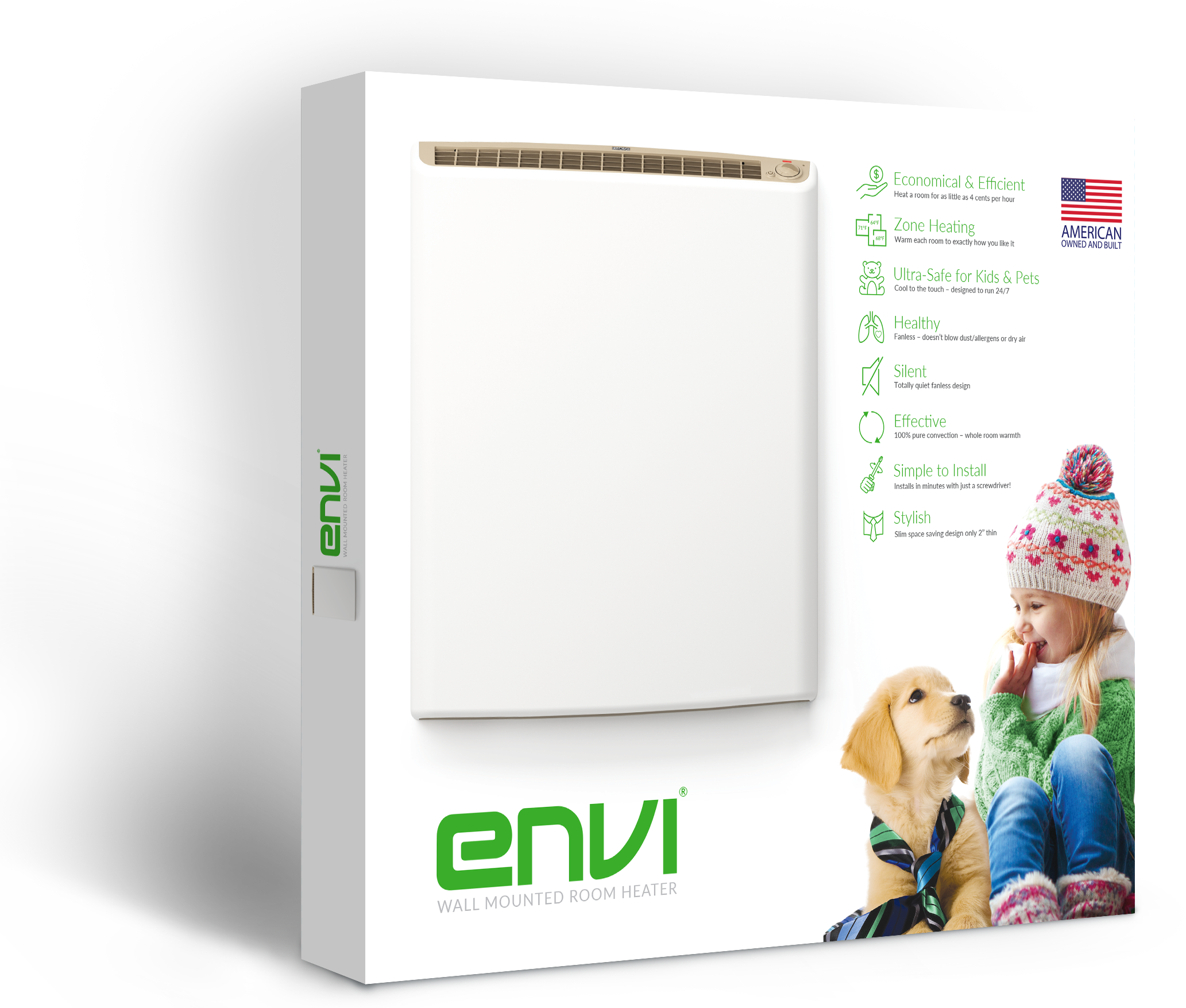
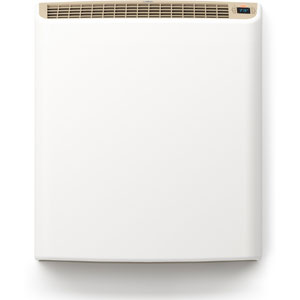
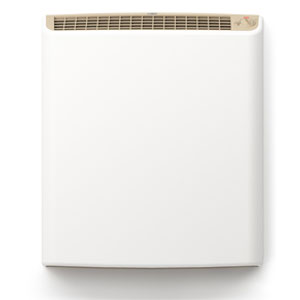
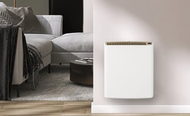
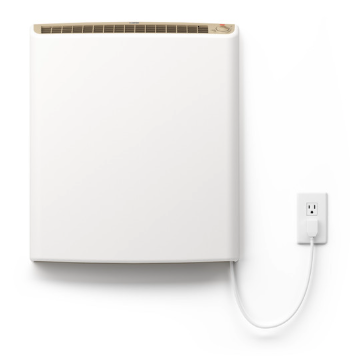
A plug in wall heater doesn't engage with any of that. Our Envi unit plugs into a standard 120V outlet and mounts on the wall through a small bracket with two screws. The convection wall heater pulls cool air in from floor level, passes it across a ceramic heating element, and releases warm air from the top in a continuous, fan-free cycle. No wiring work, no structural changes, nothing a historic preservation board would look twice at. When you want to move it or reconfigure the room, the wall behind it looks exactly the way you found it.
For rooms where supplemental heating is the only practical path forward, where a central system can't reach or a failing radiator leaves half the room cold, a plug in wall heater answers the problem without a contractor or a permit. You mount it in an afternoon, plug it in, and the room gets warm.
A Plug In Wall Heater Performs Better in a House That Holds Its Heat
Old houses lose warmth in ways that are easy to ignore until you're running a heater on high and the room won't hold temperature. Single-pane windows radiating cold. Floors with gaps between boards. Door frames settled out of square over a century of building movement. Electrical outlets on exterior walls acting as cold air vents nobody installed intentionally. Any energy efficient heater is fighting those losses whether you account for them or not, and ignoring them means running the unit harder and paying more for a room that never fully gets there.
Pairing an electric panel heater with a few targeted interventions is the practical move. A plug in wall heater running in a sealed room performs noticeably differently than the same unit fighting air infiltration on three sides:
Thermal-backed curtains. Heavy drapes on exterior windows cut heat loss through single-pane glass without touching the original frame. The window stays exactly as it is. The cold air that was radiating off the glass all night mostly stops.
Outlet gasket insulators. Electrical outlet boxes on exterior walls are consistent, ignored air infiltration points. Foam outlet gasket insulators cost about a dollar each, take ninety seconds to install, and stop cold air from moving through the box. Most people have never heard of them.
Draft stoppers at door bottoms. Foam-backed fabric stoppers under exterior doors block the cold air rolling in at floor level. A zone heating solution can only do so much when outside air cycles in every time the temperature drops.
Shrink-fit window film. Applied over single-pane windows, it adds a dead-air gap without touching the original frame. Peels off at season's end with no residue and does more thermal work than its twelve-dollar price suggests.
Dense rugs over bare floors. Cold radiates upward from uninsulated subfloors all winter. A heavy rug over the area where people actually sit stops heat from being absorbed downward and changes how the room feels at the same thermostat setting.
Seal those leaks and a small electric heater holds the temperature it reaches rather than endlessly chasing it.
Room by Room: Where a Plug In Wall Heater Changes How You Get Through Winter
Not every room in a historic house runs equally cold. Some sit on an exterior corner with two exposed walls. Some have a radiator that quit years ago and nobody replaced. Some upper-floor additions were never properly connected to anything. The approach that works is prioritizing rooms where people spend actual time and treating each one as its own heating problem.
Bedrooms usually come first. A wall mounted heater in the bedroom runs through the night at steady, low output without fan noise and without anything sitting on the floor near bedding or curtains. It's a different risk profile than a portable space heater, and it doesn't require a circuit upgrade. Living rooms with heavy window exposure usually need a portable wall heater positioned on the coldest wall, where it can work with natural air circulation rather than against it.
For houses where several rooms need individual attention, our smart wall-mounted heaters let you set separate temperatures and schedules for each space. One bedroom might need heat only from 9 PM to 6 AM. A study might need it during morning work hours. Treating each room as its own unit is exactly what zone heating solutions are built for, and it's what changes the experience in a house that was never designed with modern room-by-room temperature control in mind.
Air quality in old houses also deserves attention. Decades of dust settled in wall cavities, residue from original paint, whatever came with insulation installed in the 1950s. A convection wall heater doesn't push air through ductwork or recirculate settled particulates the way forced-air systems do. Running the EnviPure air purifier in the same space handles what the heater doesn't, pulling HEPA filtration through the room's air while the temperature stays where it needs to be.
A house that's stood for a hundred years deserves a heating plan that respects what it already is. A plug in wall heater gets you real warmth, room by room, without asking a century-old structure to become something it was never built to be.