

 LIMITED TIME OFFER!
 FREE Shipping
Plug In Wall Heater vs. Propane and Wood
31st Jul 2026
Staying warm in a tiny home or trailer is a real problem, and most people land on propane or a wood stove first because those options feel practical and self-sufficient. That makes sense. The issue is that combustion in a sealed 200-square-foot space doesn't behave the way it does in a standard house, and the gap between "running fine" and "dangerous" gets surprisingly short. We've seen well-planned builds get blindsided by exactly that. People tend to skip the plug in wall heater in those early planning conversations, usually because it doesn't fit the off-grid image, but the safety case for it is strong enough to put it at the front of the list. The data on what combustion does in small enclosed spaces is specific, and it's worth knowing before you commit to a setup.
The Propane Problem a Plug In Wall Heater Doesn't Have
Carbon monoxide is the version of this story most people know in the abstract, if they know it at all. The CDC estimates at least 430 Americans die from accidental CO poisoning every year, and a significant share of those deaths happen in RVs, campers, and trailers. Around 50,000 people end up in emergency rooms from CO exposure annually. These aren't industrial accidents. They're people sleeping in small enclosed spaces while a combustion appliance runs nearby, in setups that look a lot like the average tiny home.
The concentration piece is what makes propane specifically dangerous in a small footprint. A defective unvented gas heater in a 1,680-square-foot house might push CO to 30 ppm, bad but not immediately lethal. That same heater in a 200-square-foot van or trailer can spike levels to 200 ppm or more within minutes. Nobody running a plug in wall heater has to run those numbers because there's no combustion. Nothing burns. CO doesn't enter the space.
At 200 ppm, the body starts losing its ability to respond before the brain catches up with what's happening. People fall asleep in that window, and in a space with little cross-ventilation or airflow, levels just keep climbing. It's why so many CO incidents in RVs and campers end fatally rather than with someone waking up and calling 911.
Propane fire risk runs alongside the CO problem. The CPSC estimates roughly 600 propane tank explosions happen in the U.S. each year, causing about 155 injuries and 25 deaths annually from propane fires. Standard fire safety guidance was built for houses where the tank sits outside far from the sleeping area. In a tiny home or trailer, that tank might be within arm's reach of the bed. Those guidelines weren't written with a 200-square-foot footprint in mind.
Gas-fueled products including propane and butane accounted for 36% of non-fire CO deaths in 2020, according to the CPSC. A third of all CO deaths without a fire involved. No explosion, nothing that announces itself. Just an appliance running in a tight space without enough airflow.
Why Plug-In Wall Heaters Keep Gaining Ground
The U.S. Fire Administration estimates wood stoves cause over 4,000 residential fires per year. The leading cause is almost always creosote, the byproduct of burning wood that accumulates in the flue and eventually ignites. It builds up every time you burn, which most people know in theory and tend to underestimate in practice. Nearly half of all home heating fires happen in December, January, and February, the same stretch when stoves run hardest and chimney maintenance is the furthest thing from anyone's mind.
57% of home heating fire deaths happen in those same winter months.
NFPA data shows 80% of residential heating fires stay contained to the object of origin. That sounds like a good stat until you think about what it means in a 200-square-foot space. The object of origin is the stove. The stove is already in your sleeping space. There are no rooms between you and where the fire starts.
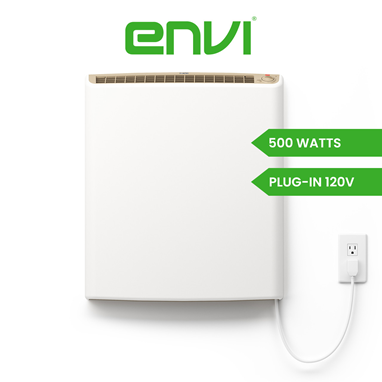
A plug in wall heater removes all of this from the equation. No flue to maintain, no creosote accumulating between cleanings, no clearance requirements to measure against combustible walls. There's nothing burning, so there's nothing to clean and no maintenance gap where a skipped step turns into a chimney fire at 2 a.m. in January.
Wood stoves require consistent upkeep, and in a tiny home the consequences of a skipped cleaning cycle land much closer to your sleeping area than they would in a larger house. Chimney sweeps, clearance checks, creosote buildup across a full season: each is manageable in isolation, but together they add up to an ongoing maintenance load that most people didn't factor in when they built.
Picking the Right Plug In Wall Heater for How You Actually Live
Most tiny homes under 400 square feet need somewhere between 750 and 1,500 watts to stay comfortable. A small electric heater in that range handles the full thermal load without straining a standard 15-amp circuit, which matters in trailer setups where the electrical system is already working hard.
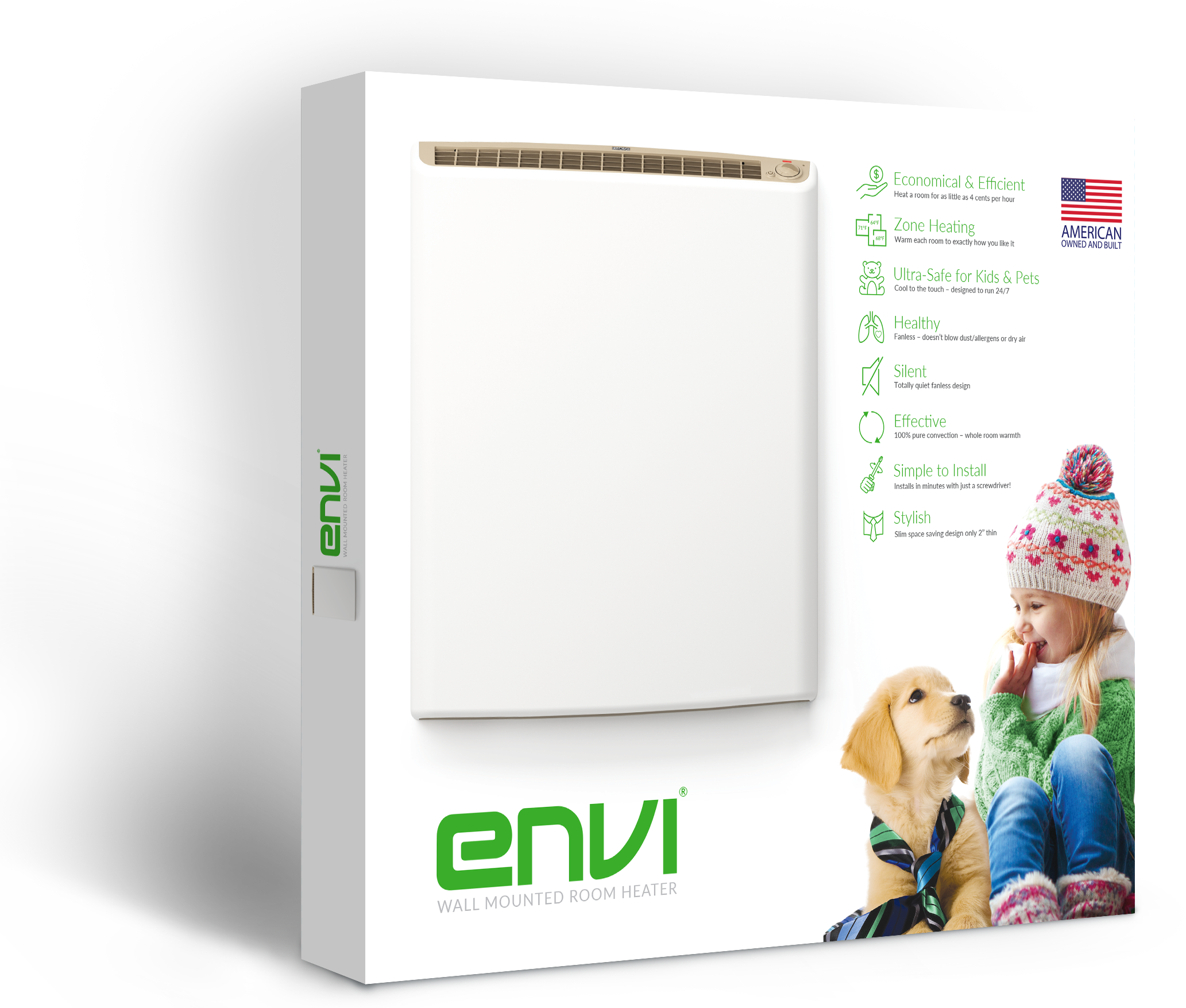
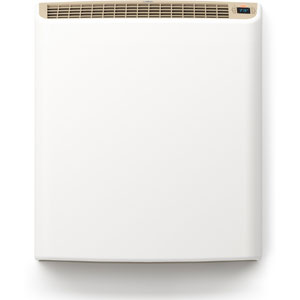
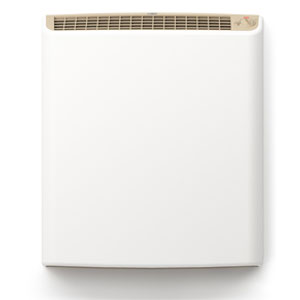
A wall mounted heater tends to be the cleanest setup. Floor space stays clear, heat distributes at a level where you actually feel it, and there's nothing to knock over in a tight space. A convection panel heater is worth a close look if you want something that sits flush against the wall and heats the air more gradually, without a fan cycling on and off in the background. Both work well in small rooms because the heat doesn't have far to travel before it reaches you.
A portable electric heater adds flexibility if your layout isn't settled yet or if you split time between a sleeping loft and a main area. It also means you're not committed to a fixed position on the wall before you've lived in the space long enough to know where heat is actually needed most.
For van and trailer builds where shore power access varies, an energy efficient electric heater with adjustable wattage settings lets you match your output to what's available. Pull back on mild nights, run higher when temperatures drop. A plug-in electric heater handles that kind of variation without any complicated wiring or permanent installation overhead.
For tiny home living, the electric heater you choose doesn't need to be elaborate. It needs to fit the space, suit your power setup, and work reliably without demanding seasonal upkeep or generating combustion byproducts in an enclosed area. The plug in wall heater category covers all three, and for a 200-square-foot space, that combination is genuinely hard to argue with.